This customary oriental sword exists as a remarkable creation of artistry, but assume you aim to to show your unique mode? Adapting your cutting tool is a deep journey, allowing you to craft a truly singular piece. From the grip wrapping and band to the covering design and heat mark, each feature offers a chance for distinctive style. This review delves into the area of katana refinements, providing perspectives for both beginners and seasoned enthusiasts hoping to form their endorsement on the heritage art of the samurai.
Newcomer's Authentic Creation
For aspirants eager to embark on the beneficial journey of historical swordplay, 1060 steel katanas supply an excellent entry point. This particular grade of fundamental steel strikes a optimal point between price and capability . While not quite as hard as superior-grade steels, 1060 enables a workable level of sharpening , making it suitable for starters to develop the rudiments of blade care and embrace the charm of authentic Japanese weaponry. It’s a superb choice for developing experience without the budgetary burden of more complex steels.
T10 Steel Katanas : Optimizing Excellence and Cost
Satisfying practitioners seeking an authentic katana experience without surpassing the cash reserve , T10 compound katanas represent a beneficial option. These implements offer a reasonable improvement in strength compared to less expensive alternatives, exhibiting decent edge retention and adequate flexibility for elementary slicing techniques. While not rivaling the exceptional characteristics of advanced steels like T100 or folded steel , T10 provides a impressive blend of functionality and reasonableness , making them a well-liked choice for newcomers and those on a limited budget .
Beyond the Sharpness : Refining Your Edge's Ornaments and Grip
Despite the glazed steel is undeniably the focal point of a katana, truly enriching its grandeur lies in the thoughtful customization of its fittings and grasp . This practice allows admirers to manifest their special character. Weigh the wide possibilities: menuki - decorative accents that supply visual appeal ; the hamon enclosures – often carefully chiseled; the tsuka foundation itself, wrapped in classic ito braid ; and the fusa cap, which can be created from various elements like ingots or nacre.
- Adopt themes that correspond with you.
- Delve into with distinctive resources .
- Value durability for a lasting consequence.
The Magnetism of the Katana: Background, Fabrication, and Iron
An katana exhibits a singular allure, steeped in centuries of oriental history and custom . More than merely a instrument of warfare , it's a icon of the warrior ethos – a fusion of ability and discipline . Its growth spanned plentiful generations, with early blades evolving into the elegant curvature and sharp edge we accept today. The craftsmanship involved is truly extraordinary , requiring long periods of education to complete. The process involves a intricate folding of forged iron , creating layers that augment the metal’s flexibility and carving ability. Numerous schools of fabricating developed , each with their unique secrets and methods for achieving the optimal poise and acuteness - a truly demanding pursuit.
- Initial Katana forms
- The role of the katana in soldier culture
- Heritage forging procedures
Choosing the Best Steel for Your Armament Project: 1060 vs. T10
Deciding on the fitting steel is remarkably important for any oriental blade project, and the selection between 1060 and T10 can be delicate. 1060 is a common American compound, offering a competent balance of toughness and persistence, rendering it appropriately easy to work. However, T10, a Far Eastern steel, generally boasts enhanced wear fortitude and can potentially achieve a superior peak hardness, although it can be substantially difficult to process and requires detailed heat treatment. Consider your proficiency and anticipated outcomes: for a novice, 1060 may be a more straightforward inception, while the experienced smith might favor the enhanced characteristics of T10.
- Ease of Handling
- Friction
- Terminal Toughness
Realizing the Capability: Sophisticated Katana Tuning Practices
Developing mastery in sword alteration extends far beyond basic whetting. Serious connoisseurs are now examining advanced techniques to truly reveal a blade's hidden potential. This involves intricate work with the hamon, utilizing specialized resources for differential strengthening and carefully determining the profile of the hand guard to optimize balance and performance. Beyond purely functional customizations, artisans are increasingly focused on producing unparalleled aesthetic splendor, through complex incising and layered varnishes that truly transform a katana into a showpiece.
Forging a 1060 Katana: From Raw Metal to Masterpiece
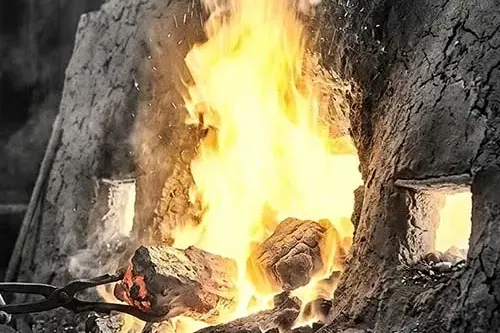
The journey initiates with conventional 1060 alloy , a tough material far separated the fine katana it will evolve . Proficient bladesmiths employ a complicated process of combining and forming the primitive steel, repeatedly swords katana warming it and striking it to rid impurities and develop a consistent grain structure. This painstaking process, often continuing for cycles, builds the important strength and ductility characteristic of a true Japanese sword . Additional heat methods , including controlled hardening and quenching , are necessary to achieve the preferred symmetry of sharpness, endurance and charm .- Stacking: Minimizes impurities and builds grain structure.
- Forging: Creates the steel into the initial blade form.
- Curing: Decides the final hardness and flexibility.
The Persistent Magnetism of the Katana: Thorough Examination of Alloy and Modification
A long-standing katana persists a powerful symbol signifying Japanese heritage , its enticement far exceeding mere military gear. Forged from rare steel and frequently featuring intricate ornaments , the process of creation itself is a esteemed art. Beyond the basic craftsmanship, the ability to tailor a katana - from the patterning to the hilt wrapping and guard - affords for a truly individual communication for both curators and followers alike. This combination of long-established steelwork and boundless personalization effectuates the katana's continued presence across the globe .